
This is a basic timetable of what our play based day looks like. Our days become quite fluid and often we do go off on tangents if children are interested in something in particular.
I see play in two forms in our classroom, self-directed by children where they self-select what they would want to do and teacher led play when we are working through Mantle of the Expert and Number Agency. I call it teacher led because within the process of mantle and number agency we are very much a part of the play, the setting is negotiated and we are very much an equal player.
Children self-direct their play and the most popular things for them to do seem to be:
Creative time, cutting,gluing, painting
doh and kinetic sand
Building with blocks and mobilo (they usually take these outside)
Sheets and loose parts, building huts etc.
Daily 6
Puppets - making up stories etc
Pretending to be number agents and play the games we do in company.
Use counters, popsicle sticks etc to make patterns
Puzzles
Using our outside chalkboard
Playing shops on our deck
Making picture books (A4 paper halved and stapled together)
*Water Play
*Chalk in the concrete
*Bush play (if we are all outside)
*Biking and scootering
*Kicking and throwing balls with a partner, making up their own games.
*Cardboard boxes when we have them.
The more open ended the items they have in the classroom, the more likely they are to take part in truly imagined play, which is so amazing to watch.
Daily Six plays a big part in our class and I want this to continue in 2017. Basically this is daily five, with one added in by our children (writing with someone) At the beginning of the year we take the time to carefully teach each part of this...
*Read to self
*Read to someone
*Work on writing (in our individual journals, actually starts out as drawing pictures.)
*Word work (magna doodles, paper and felts, writing on windows, on whiteboards, using a clipboard and a pencil)
*Listen to reading
*Write with someone (on an A3 piece of paper, drawing and writing together)
Once children have these cemented they are often spotted working on these during play based time.
This year I really want to work hard on my understanding of the different types of play. I want to organise my classroom space into 'collections' making areas of play with collections of common things in them to encourage children into different types of play and to play with items they may not commonly play with. As a school we are also aiming to work further on our outside spaces and hopefully in Term One we will have an outside kitchen.
I have discovered that there is absolutely no need for expensive play equipment and actually the more open the items included in your classroom, they more open the play will be and the more children will engage in the process of play. So this year my aim is to get rid of everything that they just don't use. I also want to take a leaf out of ECE's book and eat together at lunchtime, rather than sitting with the rest of the school. I see this time has real potential for sharing and learning.

Teacher-led play, we are very much part of the play.

The blank books, children love them.

Working on writing

We love using our bike track during play based time if we are outside

We are lucky to have a small native bush area that they children love
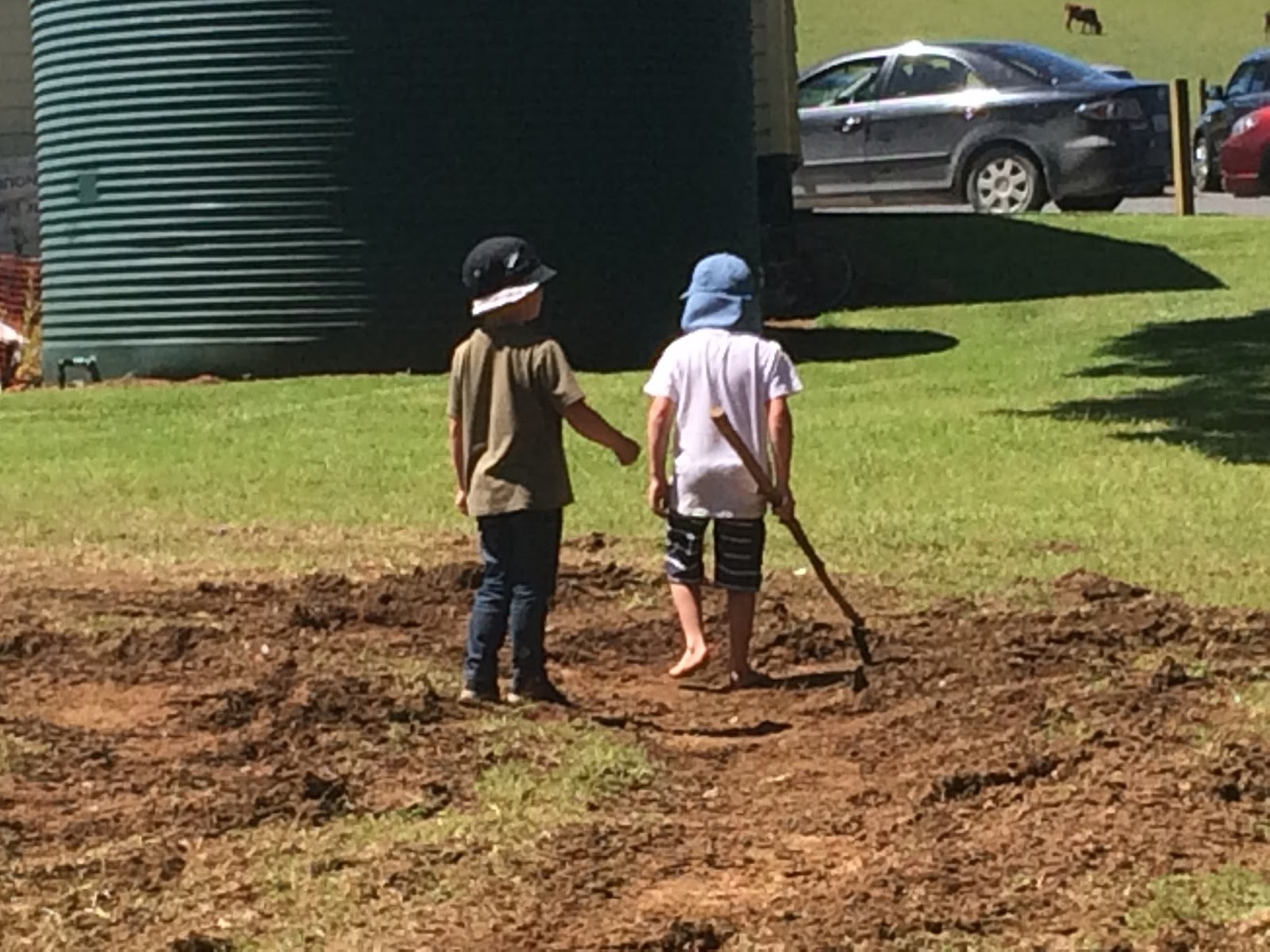
Lots of negotiation of play goes on :)

If we are interested in something we just go with it....here he is creating a life cycle for a butterfly as we had spent the morning in our lovely butterfly garden and were lucky enough to see a caterpillar make its way into chrysalis.

Love being creative at play based time

word work on the windows and reading to someone at the same time :)

Fun making patterns and pictures with popsicle sticks

Outside with the chalk

Water play

Hunting for dinosaurs with our mobilo creations

Working on writing on our brilliant outside car

Reading to someone.
Comments
Post a Comment