The important part of this approach is a strong narrative. My narrative is based strongly on the Sci-Fi movies and shows I was forced to watch as a child, with a touch of batman and a sprinkling of any other good vs evil story I have ever read or watched. The narrative needs to be open enough to allow children to add their own voice to it, and obviously doesn't have to make much logical sense. It just needs to capture the imaginative play of children.
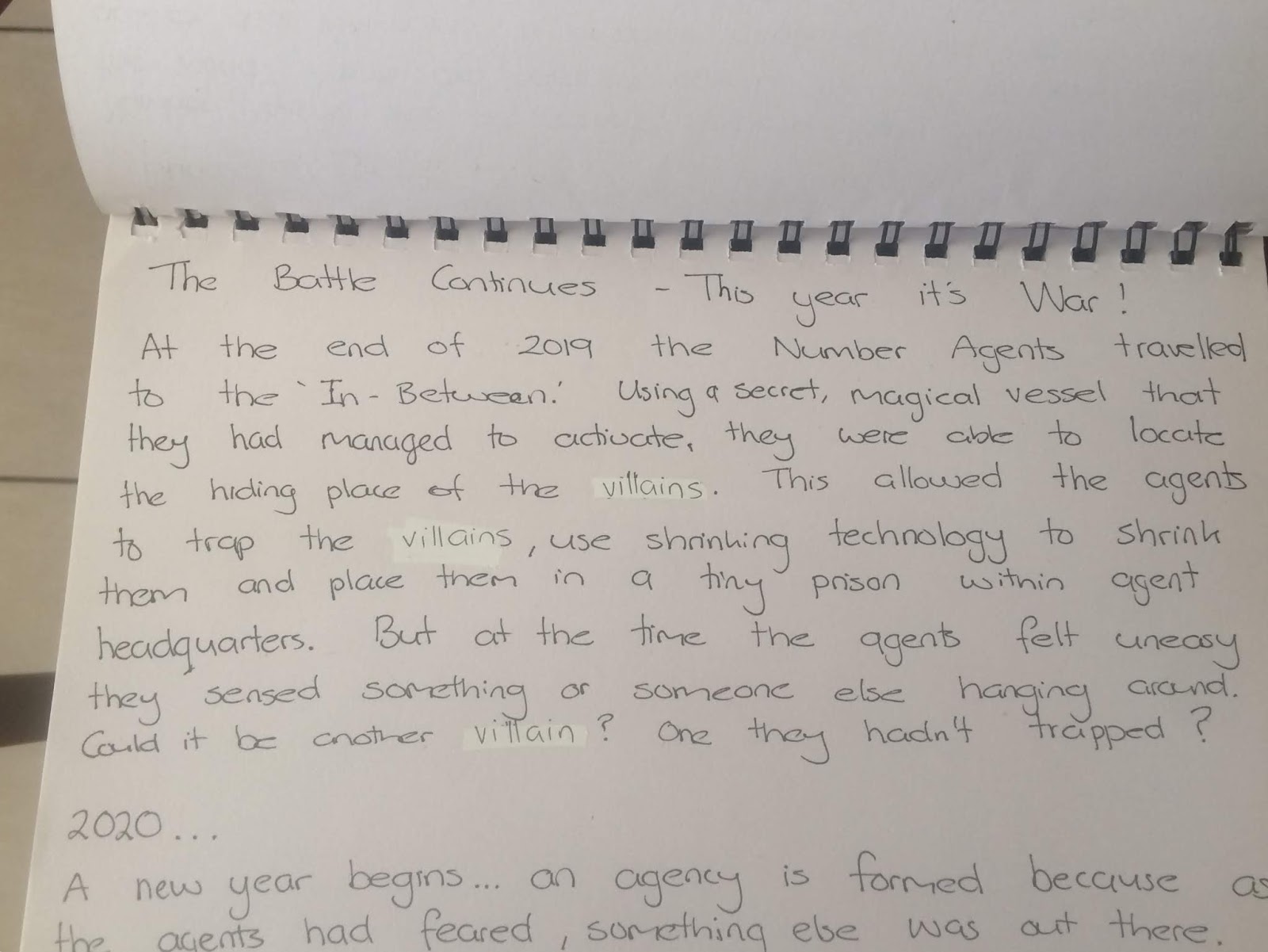
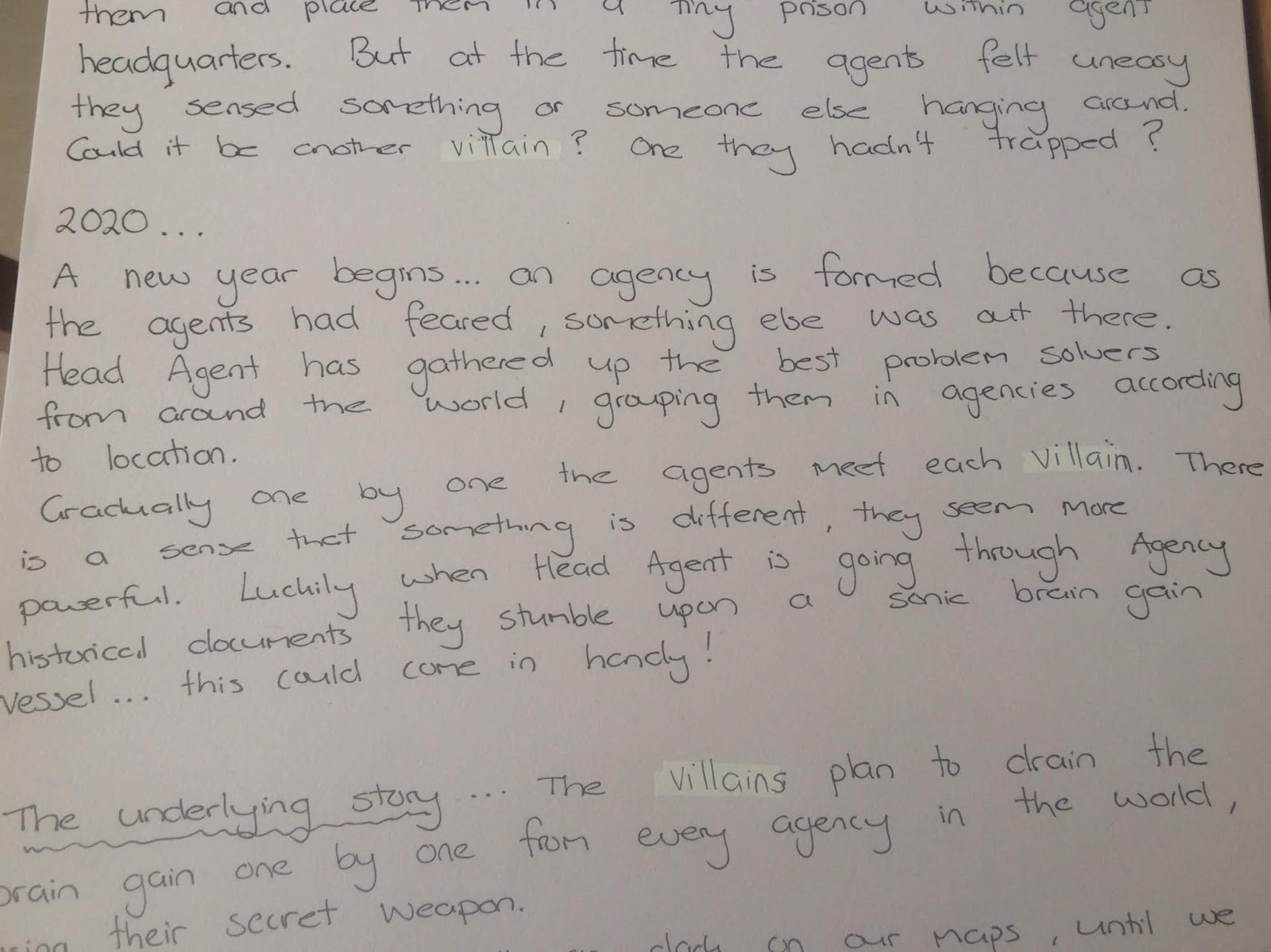
This section of the planning builds on to the blog I posted earlier today and is part of the same step in the planning. Basically it is a little like my storyboard. It sets the parameters of the story that are agreed to by the 'actors' working within it. Your narrative does not have to match mine at all, and a lot of the narrative that will be built on this year, was introduced by last years agents.
The hooking in stage will be fleshed out more when I get to that stage, with specific problems to deliver. My children are Year 1 and 2 so these problems will be based within Level 1 of the curriculum.
I hope you can read these ok, sorry for my messy scrawl, also excuse the twink, for some reason my holiday brain just couldn't get the word villain spelt right.
I have actually decided to keep all my Number Agent planning in a scrapbook this year in handwritten form, I find it fits my learning style much better and allows me to backward plan and reflect easily when I have to.


Step two will be about building a skeleton of the mathematical understandings or number sense that will be built on or developed in 2020. Will get to that video as soon as I can.
This section of the planning builds on to the blog I posted earlier today and is part of the same step in the planning. Basically it is a little like my storyboard. It sets the parameters of the story that are agreed to by the 'actors' working within it. Your narrative does not have to match mine at all, and a lot of the narrative that will be built on this year, was introduced by last years agents.
The hooking in stage will be fleshed out more when I get to that stage, with specific problems to deliver. My children are Year 1 and 2 so these problems will be based within Level 1 of the curriculum.
I hope you can read these ok, sorry for my messy scrawl, also excuse the twink, for some reason my holiday brain just couldn't get the word villain spelt right.
I have actually decided to keep all my Number Agent planning in a scrapbook this year in handwritten form, I find it fits my learning style much better and allows me to backward plan and reflect easily when I have to.
Building the narrative/rhythm of agency(what is agreed to)


Specific Storyline for 2020

Step two will be about building a skeleton of the mathematical understandings or number sense that will be built on or developed in 2020. Will get to that video as soon as I can.
Comments
Post a Comment