First I want to preface this post with a disclaimer...I am not claiming that this is the only way to run a play-based room, I am not claiming to be an expert, I am simply sharing my experience so far. Have I got everything right? No probably not. Am I still learning and developing my own pedagogy and understanding? Yes absolutely!
Our days are never the same, but they do follow the same basic flow. The one thing that is important to us, is the freedom to just go with the children's passions or interest if the urge so takes us :)
9.00 - 9.10am - We start the day with play. The bell means to come inside, but not to stop playing. As children are playing we wander round, greet them and do the roll.
9.10 ish - Our morning song will play from Wai Ako, this is the signal that children are to come to the mat, we generally sing two or three songs together. Here we will do a what's on top, if we are looking at growth mindset, we may do something connected to that, if it is emotions, something on that, if something has come up at play based time, we will discuss that....or we may share something new in our learning story scrapbook.
9.25ish - Self Directed play (one of us will be observing, one of us may be doing reading with a child)
10.10 - 11.00am - Number Agents (Maths through drama and play)
----Morning tea
11.20 - 12.00pm Self Directed Play (individual readers or check ins as required)
12.00pm - Writing through storytelling - incorporate phonics using whole words to explore sounds. Sometimes we may just work on words and sounds without the storytelling.
---Lunch
1.25pm - Self-directed play (clean up after this session)
2.15pm - Reading together, browsing at interest books, choosing one to take home
2.35 - Shared Reading from a chapter book or similar
clean up and home at 2.55pm
We do not stick to times really and our timetable is pretty fluid, we have certain things we want to fit in during the day and we ensure we do this. If a child's interest our urge takes us in a different direction, then we go with it. We do try to build in a lot of reflection on the play using photos or videos we take. At these times we will talk about the learning and dispositions we are noticing in the play. We do use big books for shared reading, but we also read to them from chapter books or treasuries. At the moment, the mr men little miss series are a favourite.
What does the play look like?


Well it varies and we are incredibly lucky to have two classrooms joined together, a courtyard, a mud kitchen, and a huge outside space. We have a range of loose parts in the classrooms and the costumes are a big hit. We also keep what we call 'invitations' out in our back room that we pull out occasionally. These include boxes made up in themes. We find the children are drawn to the type of play and mix with a range of children that have the same interests and urges as them.
It is amazing how many different types a play one child may engage in during a day and on the other hand how long certain play can be sustained.
The other thing that I have really noticed is the other benefits a play-based classroom has had for us and our children. We have less tale telling, children are far more likely to solve their own problems and are noticeably more resilient.
Children get on better, they have better social skills and are more likely to work with a variety of children in a day so friendships are wider and much happier.
We deal with behaviour infrequently. Because we are aiming our programme at specific developmental needs and operating on a very individualised level, children are engaged and motivated because we are not expecting tasks that are cognitively inappropriate for them.
Learning happens without pushing and children can make huge gains almost overnight. As you focus in on their development you are more likely to see the actual gains they are making rather than the academic ones. We know them so well, the relationships we have with each of them are far more powerful than ever before.
Can't wait to see where our play-based journey takes us next!
Our days are never the same, but they do follow the same basic flow. The one thing that is important to us, is the freedom to just go with the children's passions or interest if the urge so takes us :)
9.00 - 9.10am - We start the day with play. The bell means to come inside, but not to stop playing. As children are playing we wander round, greet them and do the roll.
9.10 ish - Our morning song will play from Wai Ako, this is the signal that children are to come to the mat, we generally sing two or three songs together. Here we will do a what's on top, if we are looking at growth mindset, we may do something connected to that, if it is emotions, something on that, if something has come up at play based time, we will discuss that....or we may share something new in our learning story scrapbook.
9.25ish - Self Directed play (one of us will be observing, one of us may be doing reading with a child)
10.10 - 11.00am - Number Agents (Maths through drama and play)
----Morning tea
11.20 - 12.00pm Self Directed Play (individual readers or check ins as required)
12.00pm - Writing through storytelling - incorporate phonics using whole words to explore sounds. Sometimes we may just work on words and sounds without the storytelling.
---Lunch
1.25pm - Self-directed play (clean up after this session)
2.15pm - Reading together, browsing at interest books, choosing one to take home
2.35 - Shared Reading from a chapter book or similar
clean up and home at 2.55pm
We do not stick to times really and our timetable is pretty fluid, we have certain things we want to fit in during the day and we ensure we do this. If a child's interest our urge takes us in a different direction, then we go with it. We do try to build in a lot of reflection on the play using photos or videos we take. At these times we will talk about the learning and dispositions we are noticing in the play. We do use big books for shared reading, but we also read to them from chapter books or treasuries. At the moment, the mr men little miss series are a favourite.
What does the play look like?


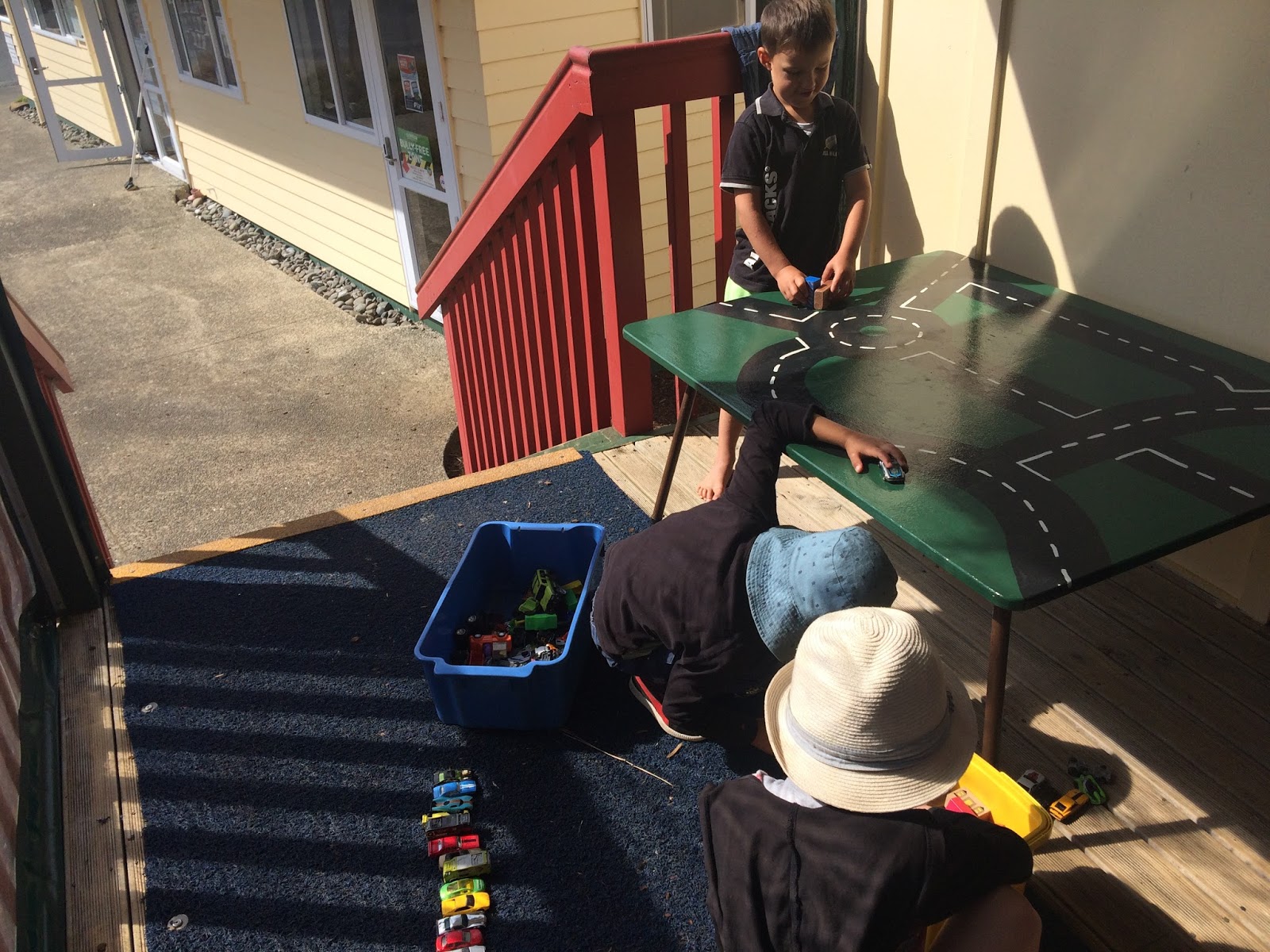


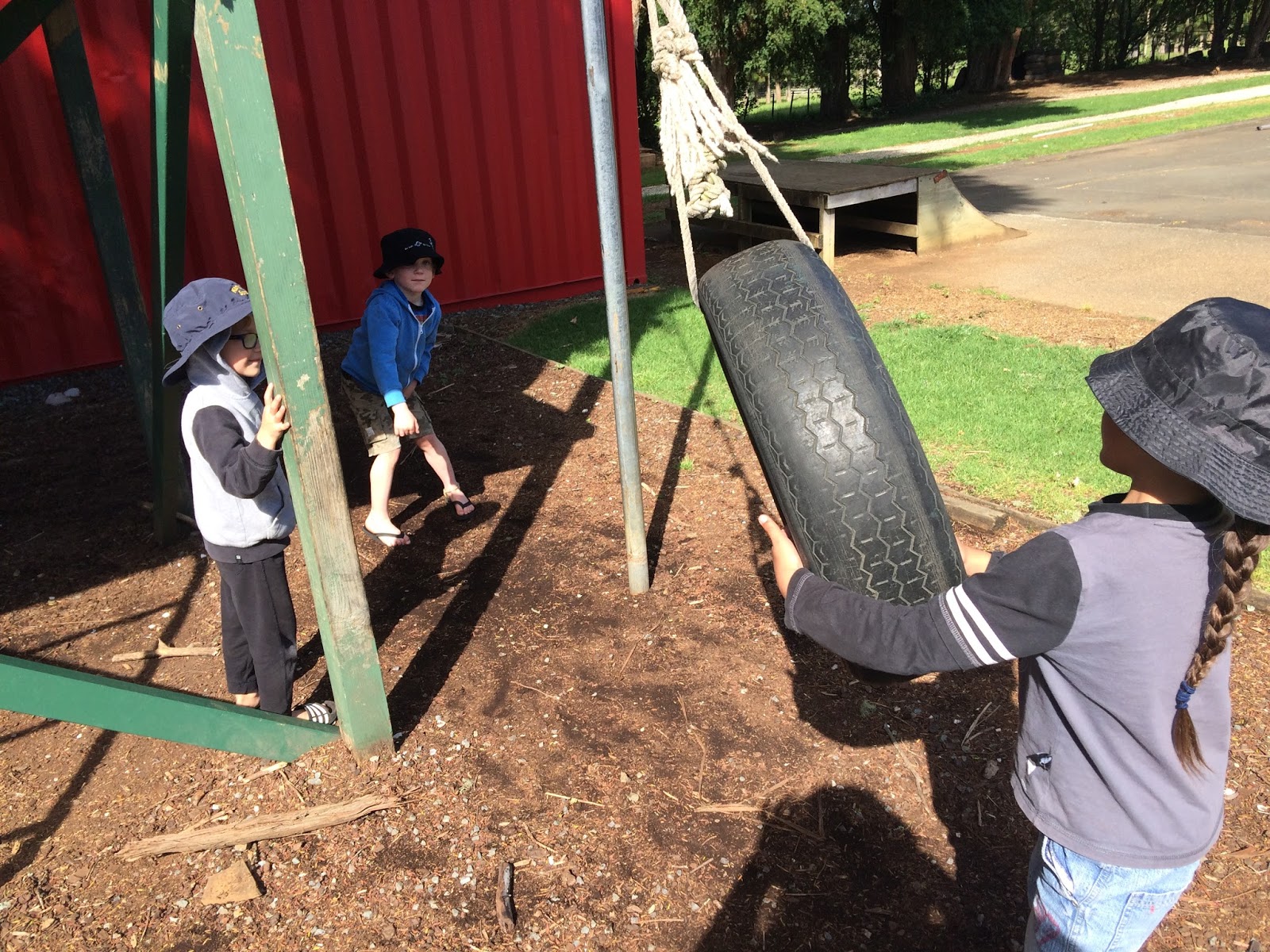


Well it varies and we are incredibly lucky to have two classrooms joined together, a courtyard, a mud kitchen, and a huge outside space. We have a range of loose parts in the classrooms and the costumes are a big hit. We also keep what we call 'invitations' out in our back room that we pull out occasionally. These include boxes made up in themes. We find the children are drawn to the type of play and mix with a range of children that have the same interests and urges as them.
It is amazing how many different types a play one child may engage in during a day and on the other hand how long certain play can be sustained.
The other thing that I have really noticed is the other benefits a play-based classroom has had for us and our children. We have less tale telling, children are far more likely to solve their own problems and are noticeably more resilient.
Children get on better, they have better social skills and are more likely to work with a variety of children in a day so friendships are wider and much happier.
We deal with behaviour infrequently. Because we are aiming our programme at specific developmental needs and operating on a very individualised level, children are engaged and motivated because we are not expecting tasks that are cognitively inappropriate for them.
Learning happens without pushing and children can make huge gains almost overnight. As you focus in on their development you are more likely to see the actual gains they are making rather than the academic ones. We know them so well, the relationships we have with each of them are far more powerful than ever before.
Can't wait to see where our play-based journey takes us next!
What a wonderful view into your day. It was inspiring
ReplyDeleteThank you