This photo got me thinking today:



So simple, but there is real depth here. See that little tower? Well it is not a tower, it is a sausage toaster. It toasts sausages really really hot. It also make them sour. But it is multipurpose, it can toast other things, but not so hot, and not sour. Did I expect that explanation, absolutely not, I was limited my adult eye, that simply saw a tour.
What an amazing imagination this child has, and what an incredible story it could turn into if she wanted to write it down.
This got me thinking. There is not a lot to this photo...it is not impressive, it is not beautiful, there is nothing remarkable about it. What is remarkable is what can not be seen, it is the learning inside what appears here in the photo and it is the learning that can then come from it.
This got me thinking further...many schools and teachers are so preoccupied with how things look, how amazing things look on the outside that the beauty of learning is lost.

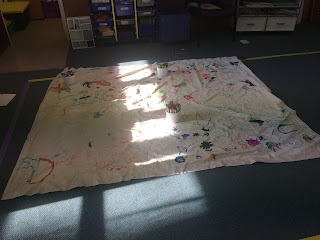
This is another example. This looks like nothing. It isn't remarkable. What is remarkable is the cooperation and creativity that has gone into it. The negotiation for space, and the willingness to let others add to our efforts.
The reality is that play-based learning is often not aesthetically pleasing. It isn't something that you would see on pinterest. It is not something that can be wrapped up in a bow and shown off for all to see. True self-directed play is often not beautiful on the outside, but inside the learning it is incredibly beautiful. If we are not willing to let go and accept that our planning wont be perfect, completed tasks wont be beautiful, they wont use equipment as intended and very rarely will things look how I want them to look, then I don't think play-based learning can truly flourish in our rooms. Truly deep play is not something that can be defined by a tidy taskboard.
This is something management especially need to get over....classrooms will not resemble something from a magazine most of the time, and if it does, then the question needs to be asked if the children are really self-directing.
Thinking about what is happening within our rooms got me thinking about our environment. I have taught in and toured around schools that are immaculate. The grounds are incredible, the play equipment is top of the line, colours abound and gardens are tidy. Money is spent on appearances.
This is where I want to put it out there, if our school is to truly be play promoting there must be aspects of it that we allow the children to take over. I am a big believer in natural play items, I love tyres, branches...in our school you will find sheets in trees, piles of mud, planks of wood...evidence that children are in charge of their space. No it is not aesthetically pleasing. It used to be, our grounds used to be tidy...or gardens were no go areas....this is not the case so much anymore....but giving this little bit of perfection away has allowed play to truly be promoted in our school. For imagination, creativity, cooperation and negotiation to thrive.
If a parent was walking around our school and then went to visit another more immaculate school, they may not choose to come to us. But you know what, school isn't about them. School is for children and play-based learning is more beautiful on the inside. If they take time to listen and watch and don't define us by appearances, their opinion may be a little different.
This is just food for thought....for our schools to be truly play promoting we need to accept that the learning is on the inside and what is seen on the outside often can not depict the quality and depth of what is happening on the inside. This is not to say that parts of our school can't be immaculate...just that we need to let go and accept that other parts wont be...and this is a powerful thing!
Child centred environments. Re-defining what is beautiful.


Comments
Post a Comment