Quite honestly, I am always super surprised by how well children just slip into the world of Number Agents. This year has been no different and every year, I get better at building the storyline, increasing the children's belief in this imagined world.
Isn't that the amazing thing about teaching? That we get to build on our practice each year and make things new an improved, not just repeat what we have always done?
This year with our play-based environment evolving and improving, I think the attachment to Number Agents has been even stronger. The children ask daily if we are going to be agents, and just like the agents before them they take this world into their own play.
Through the hooking in process, which took us about three weeks, children became more and more intrigued by this world and just like classes before them started to invent their own stories about the portal. That is where the idea of a crack in time and space came from, and now this crack is displayed proudly on our agent wall. (this is how the villains manage to get through to our world.)
The children loved the message in a bottle this year, just as much as last year and took to the concept with the glee that only a child can show. They loved it so much that this has been kept up as a way of working on strand on the days that I am not in the room.
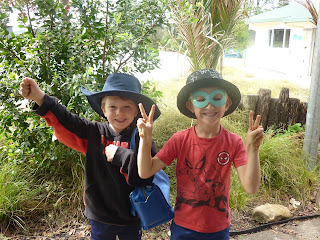
Head agent was again welcomed with open arms and the children just slipped into the world of being agents, joyously drawing their plans for our construction crew to come through and build our offices. Dressing up with excitement to take their agent photos. Wide eyed with amazement when professor visited for the first time, and overwhelmed with absolute and pure happiness when the first villain arrived to take us on.
They learned the chant quickly and were hugely keen to take on the role of clients themselves rather than have the pictures of them as a signal of their presence.
This world leaves them so open and connected to what they are learning that the maths understanding just seems to be a natural part of the process.
I've never claimed that this was self-directed play, but over time I have come to realise that although I am orchestrating the storyline and the characters that visit each day, the children really do own this process. This ownership and emotional connection is absolute key. Framed as experts, this truly is their world!
So over the last few weeks we have settled into a beautiful rhythm, it is as if they have always been agents and are ready to take on anything I put in front of them.
That is the absolute key really, this world is embraced by the teacher and the children in a beautiful dance of mutually agreed playfulness...the maths understanding is a bonus and fabulous side effect of this world.
So far we have met the Knight Adder, Subtraction Shark and Captain Fraction. Next term I will introduce more visual based problems through the Three Headed Colour Changing Dragon, introduce the Wacky Witch of Change Unknown, Doubling Dinosaur and Sum Snake. I absolutely can not wait to introduce our new villain The Grouping Goblin. He will visit once we have worked more closely on visual images and dot talks.
Our focus for term two will be on visual patterns and subitizing, last year these activities had a huge impact on progress.
If you are just starting out in Agency in Term 2, please take the time to hook children in, go back through my old posts to read about how this is done, I also have a video on youtube that describes the importance of this.


"If you are wondering where agency came from...it came from my imagination and a wonderful childhood memory. As a much younger sibling with older brothers I spent a lot of time playing on my own. I invented worlds where I was the hero, defeating villains. This world has stayed with me for all these years, I wanted to give that wonderful gift to the children in my class and so far it has been nothing but positive."
Isn't that the amazing thing about teaching? That we get to build on our practice each year and make things new an improved, not just repeat what we have always done?
This year with our play-based environment evolving and improving, I think the attachment to Number Agents has been even stronger. The children ask daily if we are going to be agents, and just like the agents before them they take this world into their own play.
Through the hooking in process, which took us about three weeks, children became more and more intrigued by this world and just like classes before them started to invent their own stories about the portal. That is where the idea of a crack in time and space came from, and now this crack is displayed proudly on our agent wall. (this is how the villains manage to get through to our world.)
The children loved the message in a bottle this year, just as much as last year and took to the concept with the glee that only a child can show. They loved it so much that this has been kept up as a way of working on strand on the days that I am not in the room.
 |
| the bottle arrives |
 |
| How we feel when a new message arrives |
 |
| The black circle (portal) arrived first. I didn't need to tell the agents this was a portal, they told me. |
 |
| Then Head Agent appeared, with messages for us in speech bubbles. |
Head agent was again welcomed with open arms and the children just slipped into the world of being agents, joyously drawing their plans for our construction crew to come through and build our offices. Dressing up with excitement to take their agent photos. Wide eyed with amazement when professor visited for the first time, and overwhelmed with absolute and pure happiness when the first villain arrived to take us on.
They learned the chant quickly and were hugely keen to take on the role of clients themselves rather than have the pictures of them as a signal of their presence.
This world leaves them so open and connected to what they are learning that the maths understanding just seems to be a natural part of the process.
I've never claimed that this was self-directed play, but over time I have come to realise that although I am orchestrating the storyline and the characters that visit each day, the children really do own this process. This ownership and emotional connection is absolute key. Framed as experts, this truly is their world!
So over the last few weeks we have settled into a beautiful rhythm, it is as if they have always been agents and are ready to take on anything I put in front of them.
That is the absolute key really, this world is embraced by the teacher and the children in a beautiful dance of mutually agreed playfulness...the maths understanding is a bonus and fabulous side effect of this world.
An example of a dragon video, this character usually only appears in video form.
Our focus for term two will be on visual patterns and subitizing, last year these activities had a huge impact on progress.


 |
| One item at a time, the wall has evolved. |

 |
| The children call the question marks mysteries, so cute! |

"If you are wondering where agency came from...it came from my imagination and a wonderful childhood memory. As a much younger sibling with older brothers I spent a lot of time playing on my own. I invented worlds where I was the hero, defeating villains. This world has stayed with me for all these years, I wanted to give that wonderful gift to the children in my class and so far it has been nothing but positive."
Comments
Post a Comment